How Artificial Intelligence is Revolutionizing PC Maintenance and Diagnostics in 2026

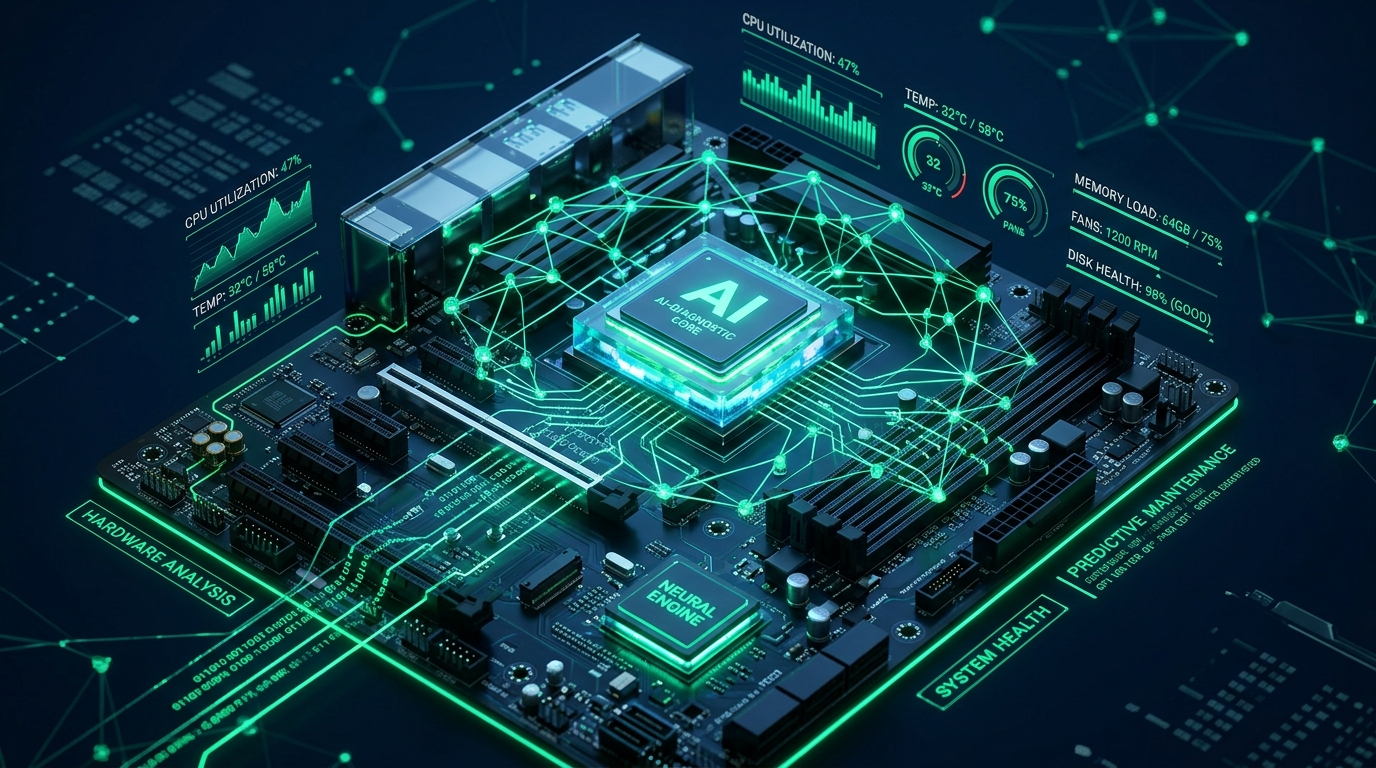
For decades, PC maintenance was purely reactive: users waited for system crashes, Blue Screens of Death (BSOD), or grinding hard drives before seeking professional repair or formatting the drive. In 2026, Artificial Intelligence applied to system diagnostics is transforming corrective repair into continuous predictive maintenance.
1. From Reactive Fixing to Predictive Monitoring
Lightweight local machine learning models analyze dozens of telemetry points that often escape human notice:
- Thermal Variations and Fan Curves: AI evaluates whether CPU temperatures are rising at abnormal rates under light workloads, flagging thermal paste degradation or dust buildup weeks before severe thermal throttling occurs.
- NVMe SSD and HDD S.M.A.R.T. Telemetry: Rather than waiting for bad sectors to corrupt data, predictive algorithms recognize subtle read/write latency spikes and voltage irregularities, alerting users before drive failure.
- Silent Memory Leaks: Background applications gradually claiming excess RAM are isolated before exhausting physical memory and bogging down the paging file.
2. Native Operating System Auto-Optimization
Modern operating systems utilize machine learning to map user habits. Unused background services have their priority dynamically lowered by the kernel scheduler, keeping processor cores focused on foreground productivity tasks.
The PruPru Philosophy: Clean Code & Instant Diagnostics
Our free Windows diagnostic utility analyzes system bottlenecks in seconds with zero bloatware and no intrusive background services.
Download PruPru.exe Free →Frequently Asked Questions
Does running AI diagnostics slow down the PC?
No. Modern predictive diagnostic routines operate with low-priority telemetry sampling or leverage dedicated on-chip NPUs, using under 0.5% CPU resources.
Can AI predictive maintenance replace physical hardware cleaning?
No. AI detects and alerts you that dust buildup is causing thermal throttling, but physical heatsink cleaning and thermal paste reapplication remain necessary every 18–24 months.